Put fiat and crypto in front of humans, they'll choose fiat
May 2021
Living in a rural place with my upper-middle-class parents outside the city, not wanting to do what a typical kid does at 16—play video games, have fun at parties, or use substances. With an anxiety to learn new skills and build a project, in less than 2 weeks I managed to learn WordPress, and quickly landed an important client who owned a shopping center with more than 50 stores, for whom I built an e-commerce site. With innocence, fear, and ignorance, I earned $100 USD a month. First lesson:
If you're scared, you can compensate with knowledge.
What do I do with $100 USD a month? Buy drugs! Logical. Nah, that's what any kid my age would do. I decided to get a Platzi subscription (the largest EdTech in LatAm) and decided to learn. What do I learn, why, how, when? Second lesson:
In preparing for battle I have always found that plans are useless, but planning is indispensable. — Dwight D. Eisenhower, 34th President of the United States
I started planning what I learned, prioritizing what I needed to learn and why it was key to learn it at that moment.
After about three months of learning, the desire to grow was consuming my thoughts. More contacts, build a product with code, grow a company? Create a Startup!?
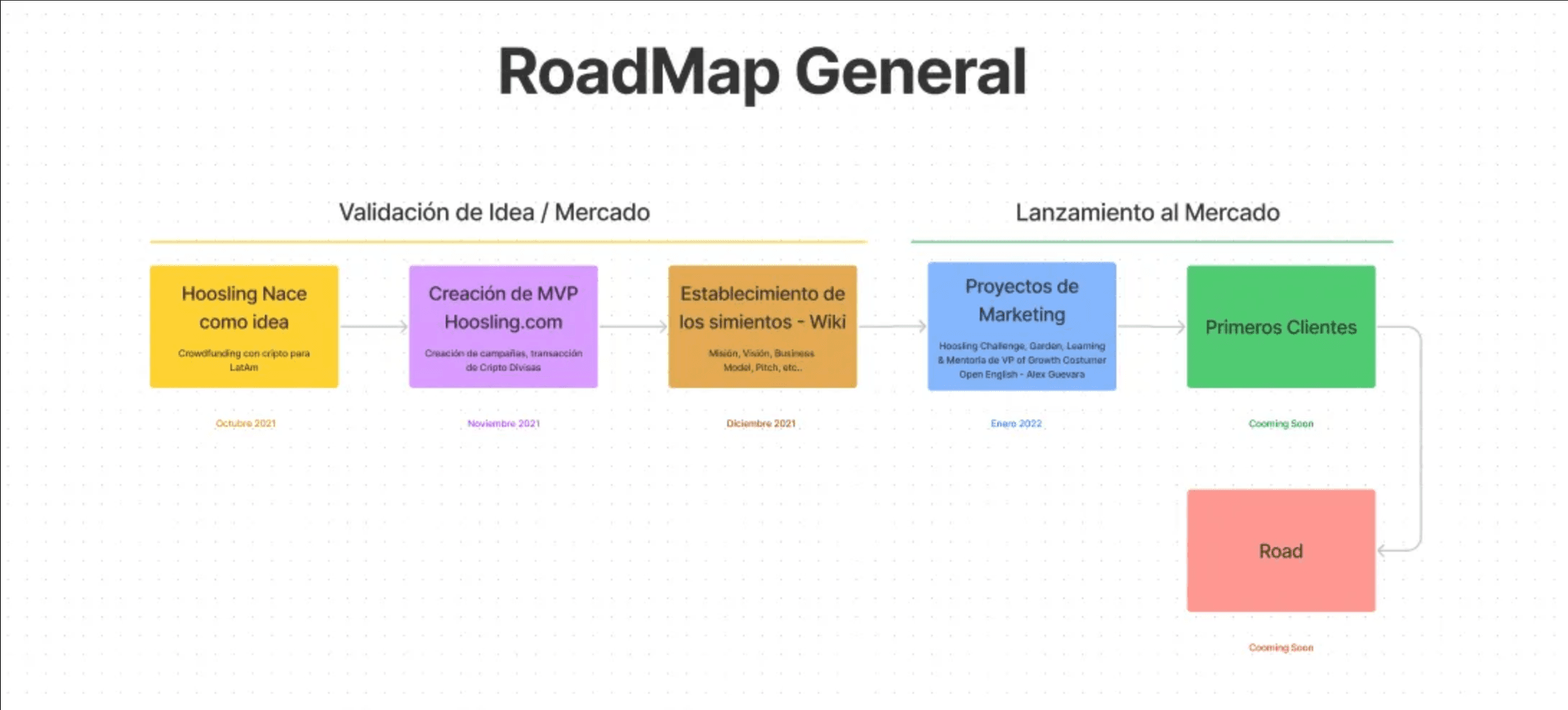
Soon after, at 16, Hoosling was born. In short, to not drag out the story:
Hoosling is the Cryptocurrency Fundraising Platform for Latin America.
Before it was formalized, we only had the idea, and in 6 months and many hours of code, we created Hoosling! Don't believe the hype though—a founder must validate three things first:
- The problem
- The market
- Your product
Validating the Problem
To validate a problem is as simple as talking to five people. Literally. But not just any five people—they must be those potential customers who are suffering the problem. Do User Research and ask yourself:
- Why do they suffer the problem?
- Why is it a problem?
- Would they pay for a solution? How much?
Many times there can be problems that people won't pay for. I call them "disguised first-world sufferings"—basically problems that don't have a big impact on people, so they wouldn't invest money to eliminate them.
Great, we validated the problem. Now the market.
Validating the Market
If you're building a tech company, start with a minimum viable product—or MVP. Third lesson:
Fail fast and cheap.
Maybe it sounds ugly, depending on whether you're just starting or you've had previous failures. There's the thinking "Failing is progressing"—yes, it's cliché. But it's true.
With the MVP we can apply a framework that I personally developed:
- Build a product without code (it doesn't have to work, it just has to present your product)—the packaging if it's tangible, or a landing page using WordPress, Webflow, Wix, or another no-code platform with clear images and explanations.
- Add a payment method through which people can exchange money for the product—if it's tangible, cash or transfer; if it's intangible, PayPal or a form.
- Drive organic or paid traffic to that product, analyze their interaction, and if there are no purchases, iterate the MVP.
- Did someone try to buy? Great, keep a counter of those people who tried, and when they're about to complete the purchase...
- Show an error or tell them you're out of stock.
With the counter of people who wanted to buy the product, that's enough to validate the market. How many should there be? At least 10. If 10 people want to acquire your product, very possibly 100, 1,000, or a million could too.
Our MVP was built through a System Design in Figma and then created in WordPress. All in less than 7 days.
Great, we validated the market. Now your product.
Validating Your Product
It's very important that it's YOUR product, and not thinking "there's already a similar product in the market, if we build we'll have the same result." Ask yourself: if a phone company is born, would it have the same growth as Apple? No, right? This applies at small scale too. Don't confirm without data with your partners, or for yourself. Fourth lesson:
In your team there will be debates. Those debates are resolved with data or with your user, not with a prestigious position in the company.
Great, we validated our problem, market, and product. What's next? Sell it at scale...
Where Are the Customers?
We hit a problem we didn't understand. We knew how to validate, talk to users, design and prototype products, code them! Where are the customers?
Meetings, meetings, and more meetings with high-ranking executives with a single question: How do we sell? Always with the same answer. We knew what to do and how to do it. But we didn't do it because our heads limited us. We didn't understand why. Fifth lesson:
If you're the smartest person in the room, you're in the wrong room.
Honesty, humility—we lacked it. Ego—we had too much. We made a simple decision that would have impact. Seek help.
After weeks looking for a mentor or person to handle Hoosling's Marketing, we met Alexander Guevara, former VP of Customer Service at Open English, who would become our mentor after a few days of talking.