Lindora
2026
Online fashion has a dirty secret. Between 30% and 40% of everything purchased gets returned.
That's not a bug. That's the business model. Brands already price in the returns. We pay for them. And the root problem is simple: you're buying based on how clothes look on someone else's body. A model. A mannequin. A flat lay photo. Never you.
I watched my girlfriend return item after item. She'd open Shein, see a dress on a model, imagine herself wearing it, buy it. Three days later it'd arrive. She'd try it on in front of the mirror, and her face said everything. Not what she imagined.
One night she said something that stuck with me: "Why can't I just see it on me before I buy it?"
Good question. Why not?
Lindora creates an AI avatar that looks like you. Your body, your proportions, your skin tone. Then you paste any product link. The jacket from Zara. The dress from ASOS. The vintage find from Depop. Lindora shows you how it looks. On you. Before you spend a cent.
No imagining. No hoping it fits. You see it.
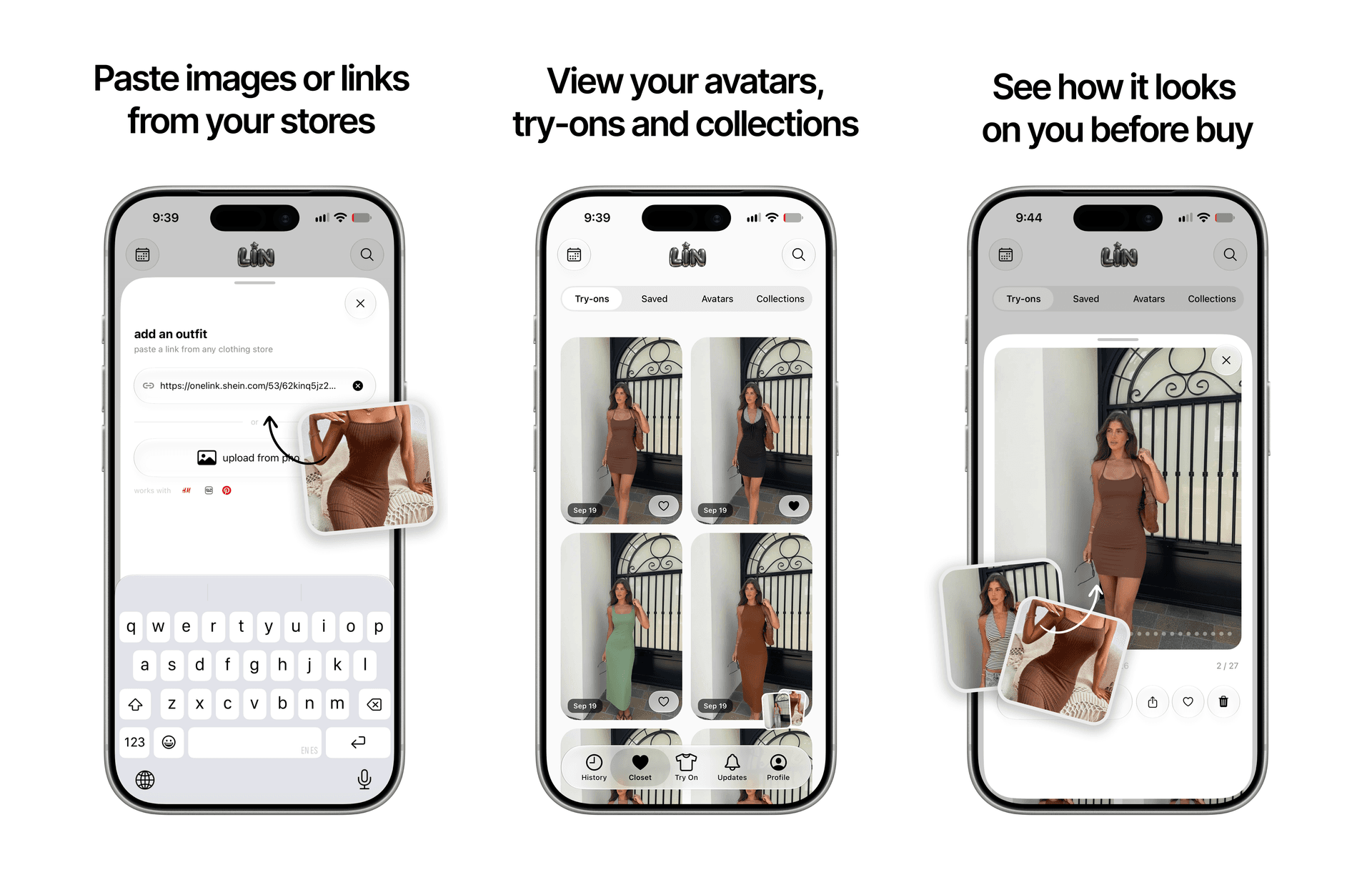
React Native handles iOS and Android. A custom ML pipeline generates the body mesh. Image segmentation extracts garments from any product page.
My girlfriend hasn't returned anything in months.